
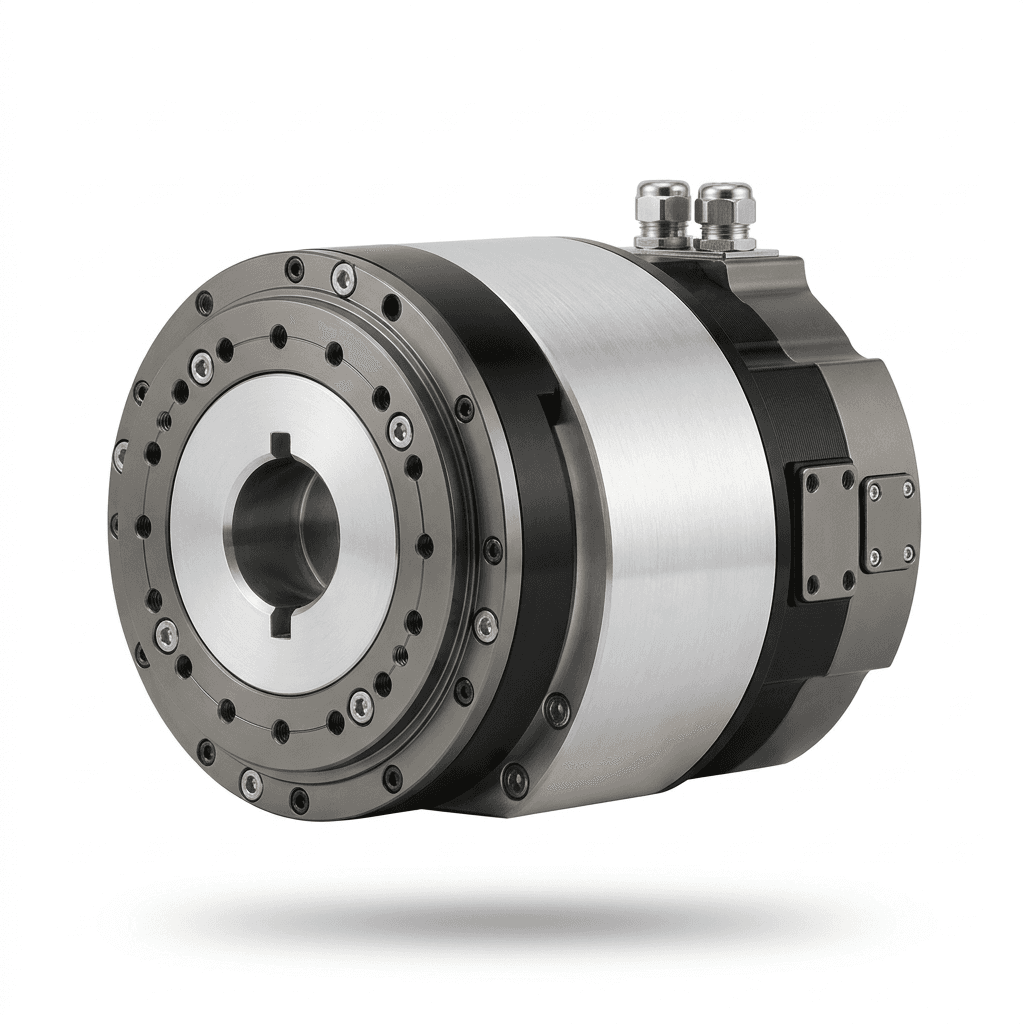
Robot Joint Module OEM Selection Guide (2026)
A practical engineering and sourcing guide for OEM teams evaluating robot joint modules for humanoid, cobot, and mobile robot programs.
Robot joint module is a broad keyword, but the purchase intent is usually very specific.
Most inquiries I receive are already in a deadline phase: the team needs a module that can pass bring-up quickly, not another round of vague spec comparison.
If you are selecting an OEM partner for a new robot platform, this page is meant to be used as a working checklist, not just background reading.
Engineering Visualization: Joint Module Integration V-Model
The V-Model illustrates that late discoveries (e.g., thermal throttle at step 7) force a costly loop back to step 2. A strong OEM provides validation data at step 4 (EVT) that perfectly mirrors the requirements of step 5 (FAT).
What a robot joint module must include
A production-grade module is not just a motor with a gearbox. In most projects, buyers expect:
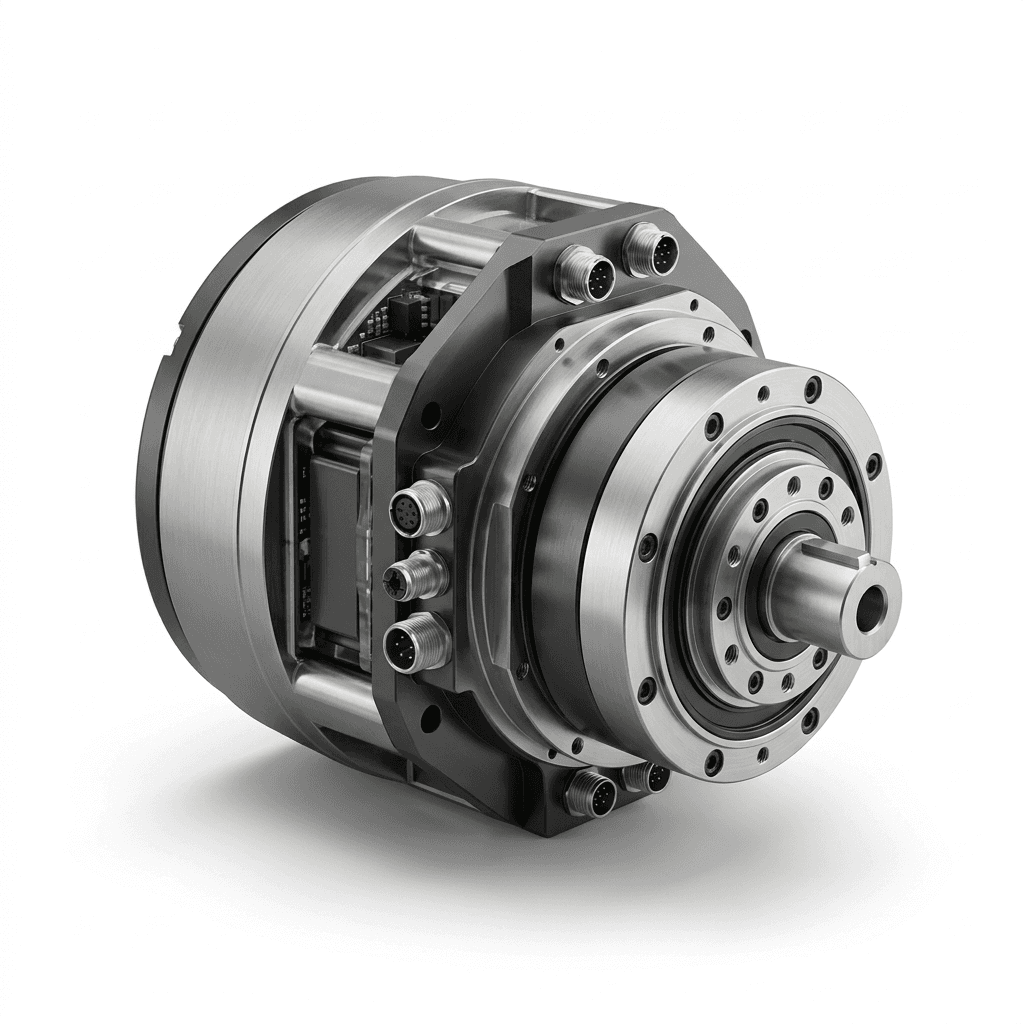
- Motor stage (frameless or integrated)
- Reduction stage (harmonic or planetary, depending on target behavior)
- Position sensing (single or dual encoder)
- Driver electronics with industrial communication options
- Thermal and mechanical interfaces that support repeatable assembly
If one layer is weak, the full joint performance becomes unstable under continuous load and shock events.
When I review RFQs, this is my first filter: if the supplier only talks about peak torque and ignores control/thermal details, I usually stop there.
Buyer data package: what to request before sample PO
Ask each supplier for a structured package, not just a PDF brochure.
| Block | Required field | First-pass screening baseline |
|---|---|---|
| Torque-speed | Peak torque, continuous torque, rated speed, duty cycle assumptions | Supplier must provide full curve and test condition |
| Precision | Backlash, repeatability, positioning accuracy | Backlash and repeatability values must include test method |
| Thermal | Continuous run temperature rise, derating behavior | Temperature-rise curve required for your target ambient |
| Electrical | Bus voltage, peak/continuous current, regen handling | Must define limits and protection strategy |
| Control | Supported modes, encoder type, communication protocol | Must match your controller architecture from day one |
| Reliability | Life test cycles, vibration, connector durability | Evidence required, not marketing claims |
| Manufacturing | Key tolerance control and outgoing QC process | Must show repeatability for pilot-to-volume transfer |
Quantitative Tolerance Stacking Reference (Harmonic Drive Integration):
| Interface | Typical Tolerance | Impact on Performance if Ignored |
|---|---|---|
| Wave Generator to Motor Shaft | ±0.005 mm (Concentricity) | Causes periodic torque ripple (once per rev) and premature bearing wear. |
| Flexspline Output Flange | < 0.01 mm (Runout) | Multiplies tool-center-point positioning error exponentially with arm length. |
| Circular Spline Housing Fit | H7/j6 or similar transition fit | Loose fit causes hysteresis (lost motion); tight fit causes radial stiffness spike and overheating. |
| System Backlash Target | < 1 arc-min | Essential for cobots requiring stable impedance control or zero-backlash trajectory tracking. |
Quick selection framework for B2B teams

Use this five-step filter before requesting samples:
- Define torque-speed envelope per joint instead of only peak torque.
- Confirm duty cycle and ambient temperature assumptions for continuous operation.
- Lock communication stack early (for example EtherCAT or CANopen) to avoid control stack rework.
- Require tolerance and repeatability data, not only nominal spec sheets.
- Check OEM customization boundaries: connector type, harness routing, flange, brake, and firmware profile.
One practical tip: ask for test conditions on the same email thread as the quote. If test conditions arrive later as an attachment revision, timeline risk usually increases.
Copy-paste RFQ template for robot joint module sourcing
Use this structure in your first supplier round:
- Application: robot type, joint index, load case, duty cycle, ambient, lifecycle target.
- Mechanical target: envelope, mounting interfaces, allowable backlash window, bearing load direction.
- Motion target: continuous torque/speed, short-time peak window, acceleration profile.
- Control target: protocol, control mode, update cycle, fault-state behavior.
- Validation target: sample quantity, FAT test list, pass/fail thresholds, required report format.
- Commercial target: EVT timeline, pilot timeline, annual volume range, Incoterm preference.
Suppliers that answer in this structure are usually easier to execute with in NPI.
Common RFQ mistakes that delay projects
The most frequent delays come from incomplete RFQ packages:
- Missing load case definitions (dynamic vs static)
- No agreed communication profile for commissioning
- Unclear acceptance criteria for backlash, efficiency, and thermal rise
- No target lead time split between EVT, DVT, and pilot production
An RFQ with these four blocks clearly defined usually cuts total sourcing cycles by weeks.
The mistake I see most often is mixing prototype targets with mass-production expectations in one line item. Keep those two targets separate from the start.
FAT acceptance checklist (engineering side)
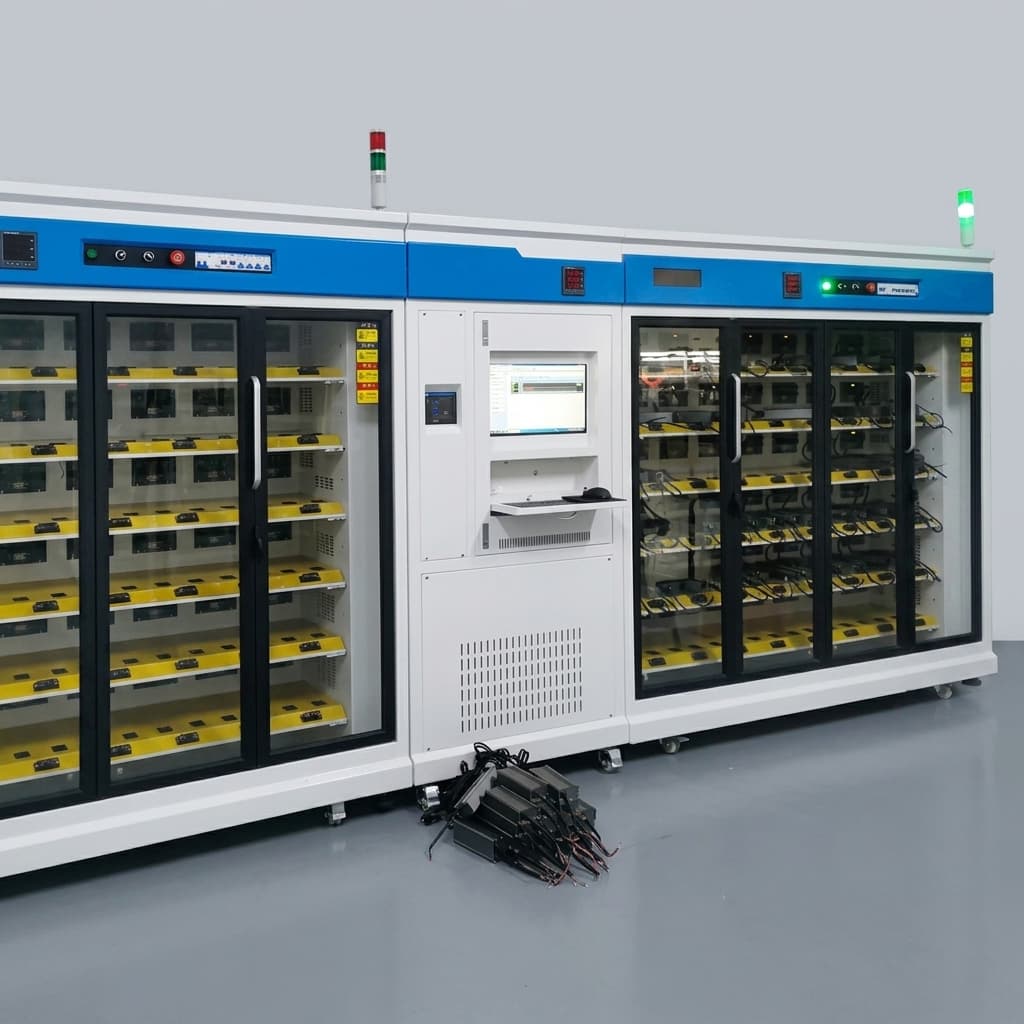
Before approving pilot production, require these minimum checks:
- Torque-speed verification against submitted curve.
- Thermal run test under your representative duty cycle.
- Communication robustness test: power cycle, bus reconnect, fault recovery.
- Repeatability and backlash measurement using agreed fixture and procedure.
- Basic endurance run with post-test drift comparison.
Without this gate, early batch inconsistency will be discovered too late.
Where integrated modules make sense first
Integrated robot joint modules are usually the fastest route for:
- Humanoid or legged prototypes needing rapid iteration
- Cobot joints with strict installation envelope constraints
- Mobile and service robot programs that prioritize wiring simplicity
For reference product direction, see:
- Integrated joint module with EtherCAT/CANopen
- QDD actuator for backdrivable designs
- Frameless torque motor options
OEM customization scope we support
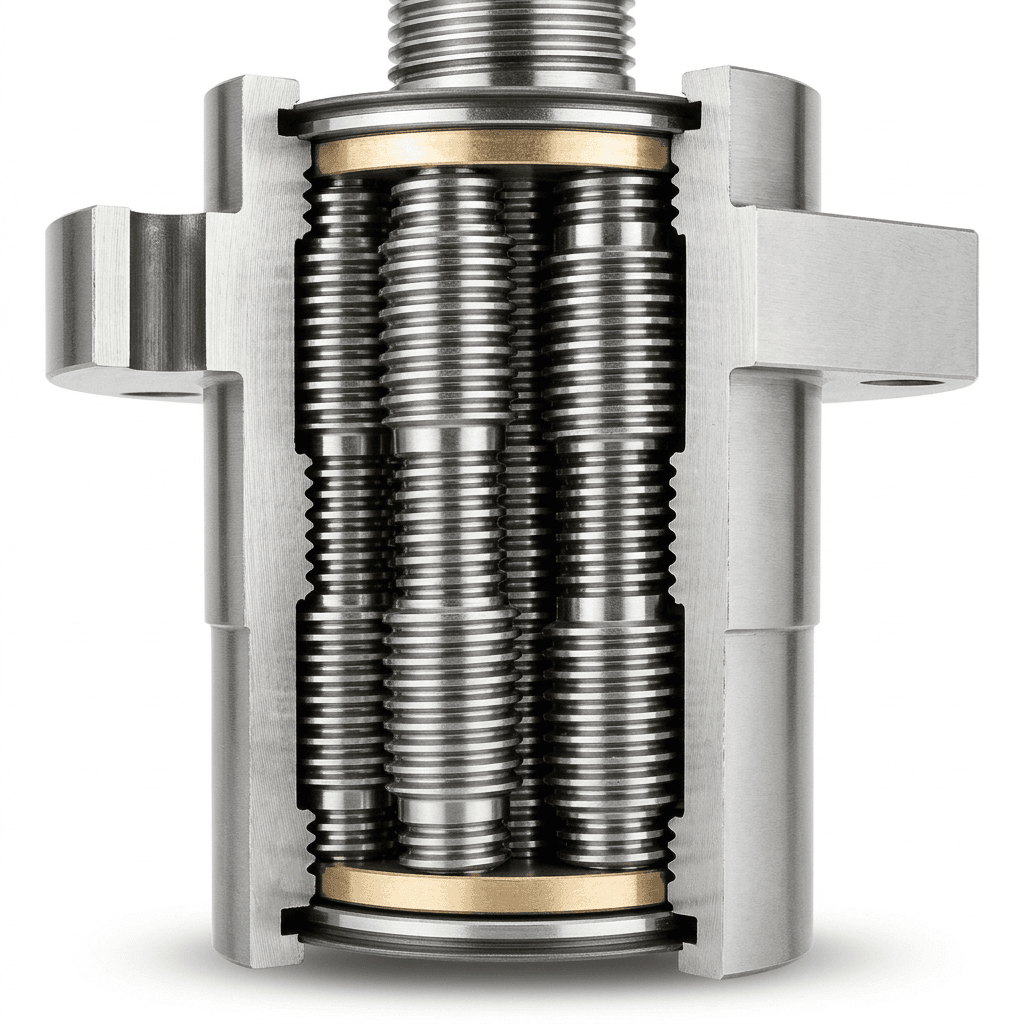
Typical customization requests from global buyers include:
- Output torque/speed tuning at system level
- Dual-encoder and communication profile options
- Housing and mounting interface changes
- Small-batch validation builds before volume ramp
This is often the difference between a lab demo and a stable field deployment.
Commercial terms that impact technical risk
Ask these early and in writing:
- Sample lead time and engineering change cutoff
- Pilot lot process-lock definition
- Critical component alternates and notification policy
- Rework and replacement workflow for early failures
Commercial ambiguity usually becomes engineering instability later.
If your program has a hard launch window, define ECO handling rules before sample payment. It avoids late disputes that look commercial but are actually technical.
Method and scoring model used in this guide
This guide is written for pre-nomination supplier selection and early sample approval.
I use a simple weighted model in first-round screening:
| Gate | Weight | Minimum pass condition |
|---|---|---|
| Torque-speed and thermal evidence | 30% | Full curve, test condition, and duty-cycle disclosure |
| Control and protocol readiness | 20% | Clear bus profile, fault-state behavior, and startup sequence ownership |
| Manufacturing repeatability | 20% | Process controls and pilot-to-volume consistency evidence |
| Validation discipline | 20% | Defined FAT checklist with measurable pass/fail thresholds |
| Commercial execution clarity | 10% | ECO cutoff, lot traceability, and replacement workflow in writing |
A supplier that fails any hard gate should not be approved by weighted score alone.
Copy-ready validation worksheet (buyer use)
Use this worksheet in your first technical meeting and keep all answers in one thread:
| Checkpoint | Required supplier output | Buyer acceptance note |
|---|---|---|
| Torque-speed envelope | Curve + ambient + duty assumptions | Curve must match application load case |
| Thermal stability | Continuous run report + derating rule | No hidden thermal throttle under target cycle |
| Bus behavior | Startup, fault, and recovery sequence | Behavior must be reproducible across power cycles |
| Repeatability | Backlash/repeatability method and raw values | Method must match agreed fixture and tolerance |
| Pilot readiness | Process lock and change-notification rule | No silent component or firmware substitutions |
Boundaries of this article
- This article is for engineering-procurement alignment, not legal advice.
- HS classification, import compliance, and destination-market declarations must be confirmed by your broker/compliance team.
- Numeric values in this guide are framework examples; final release must rely on your program-specific validation records.
Sources and standards for deeper review
- EtherCAT Technology Group, protocol and conformance overview: ethercat.org
- CAN in Automation (CiA), CANopen overview: can-cia.org
- ISO quality management background (ISO 9001): iso.org
- EU RoHS legal text (Directive 2011/65/EU): eur-lex.europa.eu
- ECHA REACH Candidate List updates: echa.europa.eu
Last reviewed: 2026-05-25
Inquiry
If you are qualifying suppliers for your next robot joint module program, contact our engineering team directly:
- Email: [email protected]
- WhatsApp: +86 18857971991
Categories
More Posts
Functional Safety (STO & SBC) in Integrated Joint Modules: A Procurement Guide
Evaluate functional safety, STO, and SBC requirements for robotic joint modules, with sourcing checks for engineers and procurement teams before a vendor RFQ.

Frameless Torque Motor Guide: Outrunner vs Inrunner for Robotic Joints
A practical comparison of outrunner and inrunner frameless torque motors for cobot, humanoid, and precision motion applications.
Integrated Joint Actuator Guide: EtherCAT vs CANopen for OEM Projects
Compare EtherCAT and CANopen integration paths for robotic joint actuators, with practical OEM sourcing checkpoints for faster deployment.