Integrated Joint Actuator Guide: EtherCAT vs CANopen for OEM Projects
Compare EtherCAT and CANopen integration paths for robotic joint actuators, with practical OEM sourcing checkpoints for faster deployment.
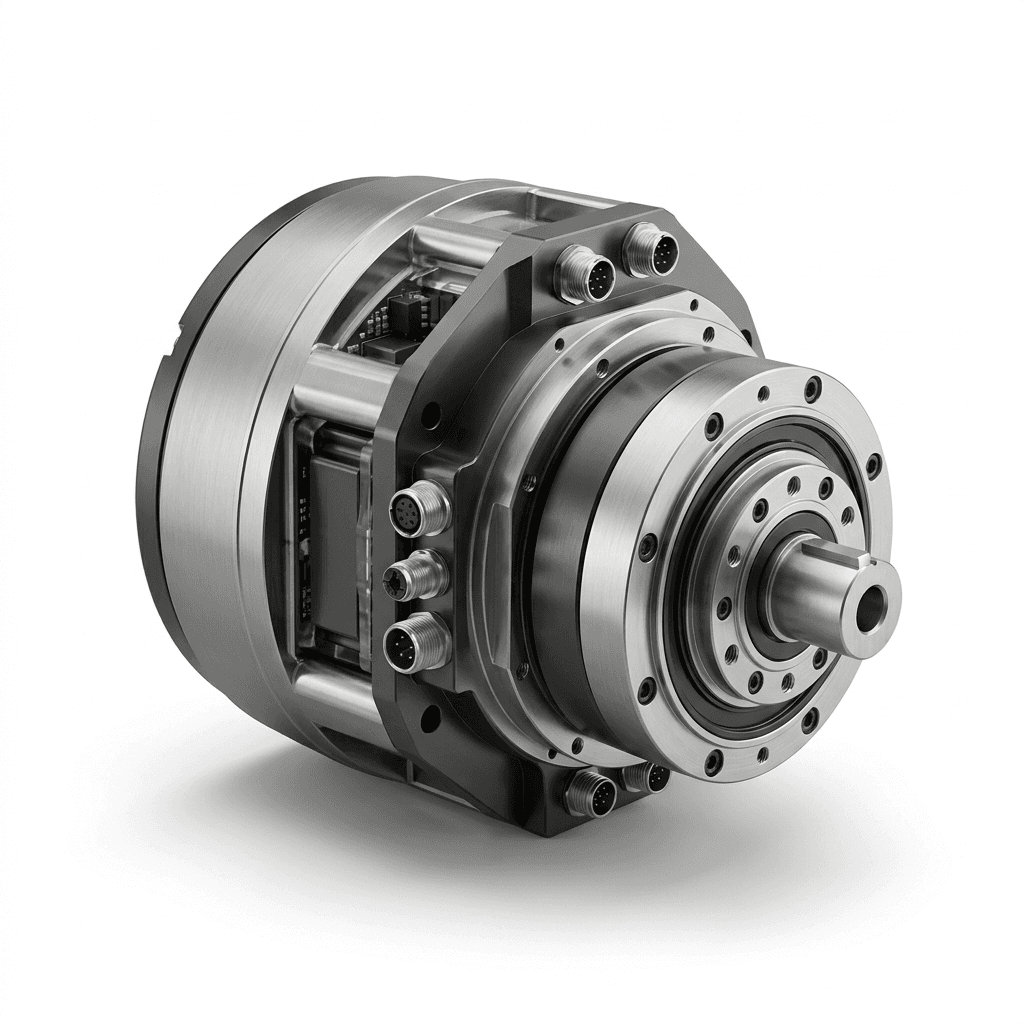
Integrated joint actuator decisions usually fail for one reason: protocol choice is delayed until after mechanical packaging is already frozen. By that point, teams are forced into expensive adapter workarounds.
The main architecture decision is often communication: EtherCAT or CANopen.
I treat this as an early design decision, not a late software setting.
EtherCAT vs CANopen at a glance
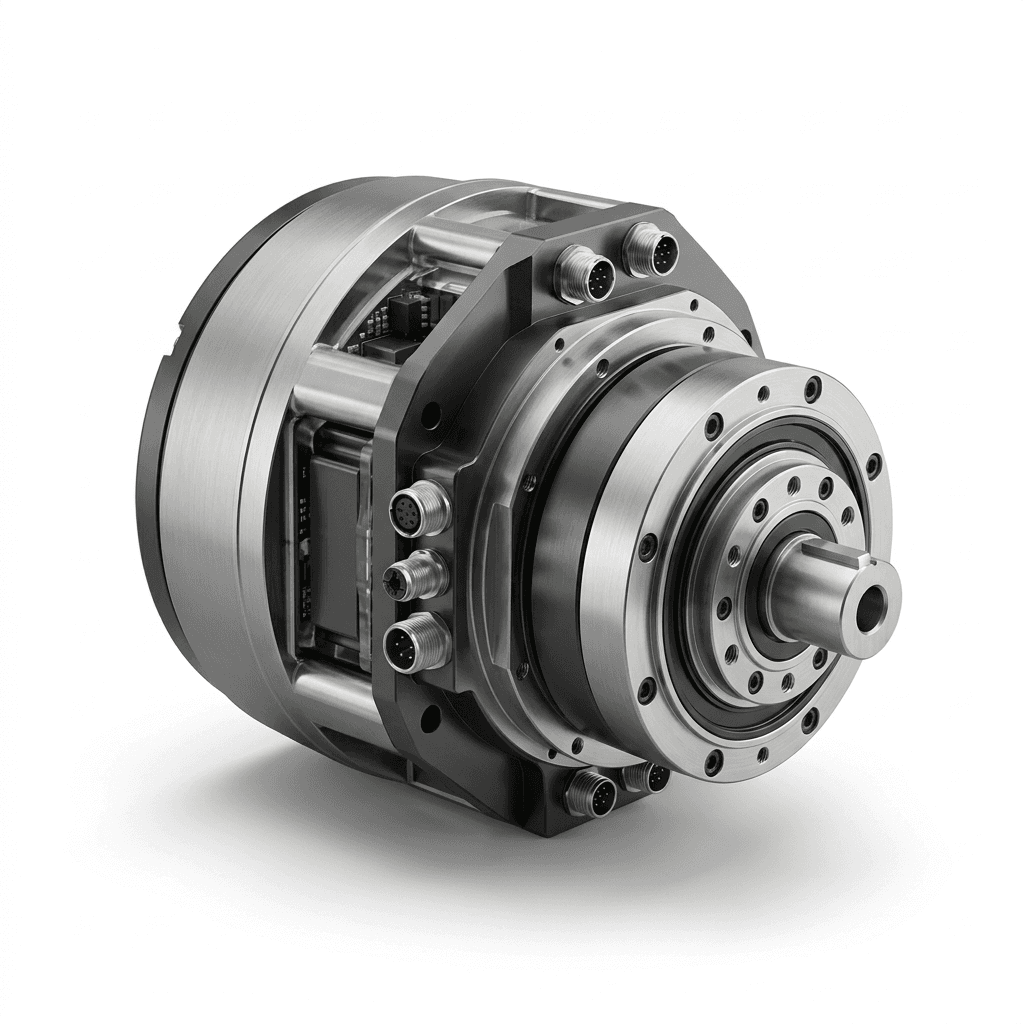
Both are valid in industrial robotics. The right choice depends on synchronization demand and software ecosystem.
EtherCAT: best for high-axis-count systems, tight synchronization, and high control bandwidth.CANopen: often simpler for cost-sensitive or moderate-speed systems with robust bus behavior.
Engineering Visualization: Data Frame Processing Topology
In CANopen, every node competes for bus access (arbitration), meaning latency scales non-linearly with node count. In EtherCAT, the master sends a single frame that passes through all nodes on the fly, guaranteeing sub-microsecond synchronization regardless of node count.
In practical OEM programs, protocol choice impacts cabling, control firmware, diagnostics workflow, and commissioning time.
Decision matrix for real projects
Use this matrix for first architecture choice:
| Project condition | Prefer EtherCAT | Prefer CANopen |
|---|---|---|
| Multi-axis synchronized motion | Yes | Conditional |
| Tight cycle-time target | Yes | Conditional |
| Controller ecosystem already CANopen-centric | Conditional | Yes |
| Fast prototype with lower system complexity | Conditional | Yes |
| Long-term expansion to high-axis systems | Yes | Conditional |
Quantitative Latency & Bandwidth Benchmark:
| Protocol Parameter | EtherCAT | CANopen | Business Impact for Buyers |
|---|---|---|---|
| Max Baud Rate | 100 Mbps (Fast Ethernet) | 1 Mbps (at <40 meters) | EtherCAT handles complex dual-encoder high-resolution feedback without choking. |
| Cycle Time (10 axes) | < 100 μs | ~2-5 ms | Crucial for dynamic balancing in humanoids (requires <1ms loop). |
| Synchronization Jitter | < 1 μs (Distributed Clocks) | ~100 μs (SYNC object) | EtherCAT prevents "tool-center-point" drift in multi-axis robotic arms. |
| Physical Layer | Point-to-Point (Cat5e) | Bus Topology (Twisted Pair) | CANopen allows simple T-branching; EtherCAT requires daisy-chaining inside the robot arm. |
Most teams should decide protocol before locking harness and cabinet interfaces.
In real projects, that single sequencing choice often decides whether commissioning takes days or several weeks.
Typical engineering targets to align early
These are planning targets, not universal guarantees:
- Control update cycle target and worst-case variation window
- Multi-axis synchronization behavior during acceleration and deceleration
- Fault-state transition timing and deterministic recovery behavior
- Bus-load margin at your planned node count
If suppliers cannot define these clearly, integration risk is high.
If the answer is “we can optimize later,” request a written test plan before moving forward.
Engineering checks before selecting a bus stack

Ask for these details before sample approval:
- Supported profile and object dictionary coverage
- Multi-turn absolute position handling behavior
- Fault handling and recovery timing under communication interruption
- Cycle-time stability under multi-axis load
- Toolchain compatibility with your PLC/IPC or ROS stack
This avoids expensive controller-side patching later.
I also recommend asking who owns the first integration debug session. If ownership is unclear, delays are almost guaranteed.
DS402 readiness checklist for integrated actuators
For B2B buyers running standard motion stacks, validate:
- Controlword/statusword behavior in all core state transitions.
- Operation modes supported and mode-switch stability.
- Homing behavior and reference-loss handling.
- Position/velocity/torque feedback consistency under load steps.
- Fault reset behavior after power-cycle and bus reconnection.
Ask suppliers to provide example object mapping and startup sequence notes.
Mechanical-electrical coupling still matters
Even with a strong communication stack, field issues appear if the module ignores system mechanics:
- Gear stage mismatch with duty cycle
- Thermal bottlenecks inside compact housings
- Connector orientation that complicates routing in dense robots
For most buyers, protocol and mechanical fit must be evaluated together.
Commissioning test plan buyers should require
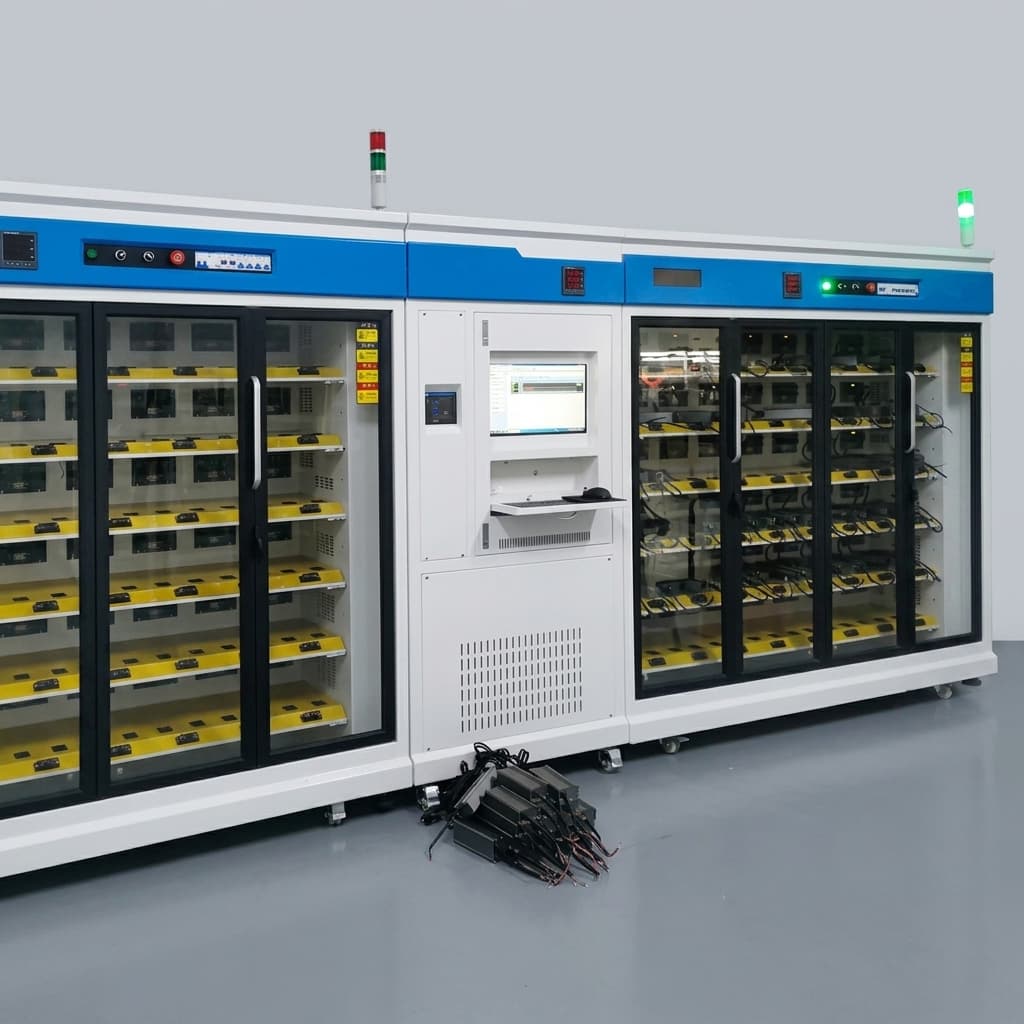
Before pilot approval, run:
- Axis bring-up test with full startup/shutdown sequence logging.
- Stress run with planned node count and realistic cycle-time settings.
- Disturbance test: cable unplug/replug, controller reboot, brownout simulation.
- Thermal test while communication remains under normal command load.
- Post-test drift check for position and fault-counter trends.
A protocol that looks fine in bench mode can still fail under sustained system load.
OEM workflow that reduces risk
A robust sourcing flow usually looks like this:
- Application briefing with target joint map and control architecture
- Sample build with protocol verification and motion profile tests
- Joint-level reliability checks (thermal, vibration, repeated cycles)
- Pilot lot with controlled process records before volume release
This approach catches integration risk earlier than pure spec-sheet comparisons.
Supplier questions that expose hidden risk
Ask directly:
- Do you provide startup configuration files and revision control rules?
- How do you handle firmware change notification across batches?
- What is your policy if communication behavior changes after a component substitution?
- Can you guarantee protocol behavior consistency from EVT to MP?
These answers are often more important than headline peak torque.
If the supplier refuses revision-controlled startup files, treat that as a red flag.
Method used to compare EtherCAT and CANopen here
This comparison is intended for OEM program selection, not protocol theory only.
I use a three-layer decision order:
- System requirement layer: axis count, synchronization demand, cycle-time target.
- Integration layer: controller stack, tooling maturity, commissioning ownership.
- Lifecycle layer: fault recovery consistency, change-control discipline, maintainability.
If layer 1 already requires tight multi-axis deterministic sync, EtherCAT usually wins regardless of initial software convenience.
Commissioning verification sheet (before pilot release)
| Test item | Required artifact | Pass condition |
|---|---|---|
| Startup and homing sequence | Video + log + state map | Reproducible across repeated cold starts |
| Multi-axis cycle stability | Timestamped bus/load logs | No unstable jitter under target node count |
| Fault and recovery behavior | Fault injection record | Controlled transition and deterministic recovery |
| PDO/object mapping consistency | Versioned mapping file | Same mapping between sample and pilot lots |
| Thermal + communication coupling | Thermal report during command load | No bus instability under thermal stress |
Decision boundaries
- This guide does not replace your functional safety analysis.
- DS402 compatibility claims should be verified by real startup scripts, not brochure text.
- Controller-side assumptions (PLC/IPC/ROS stack) must be frozen before driver finalization.
Sources and standards for follow-up
- EtherCAT Technology Group: ethercat.org
- CAN in Automation (CANopen overview): can-cia.org
- CANopen device profile landscape (CiA): can-cia.org profile reference
- IEC overview for industrial communication context: iec.ch
Last reviewed: 2026-05-25
Related product pages
Inquiry
Need integrated joint actuators with OEM customization support?
- Email: [email protected]
- WhatsApp: +86 18857971991
Categories
More Posts
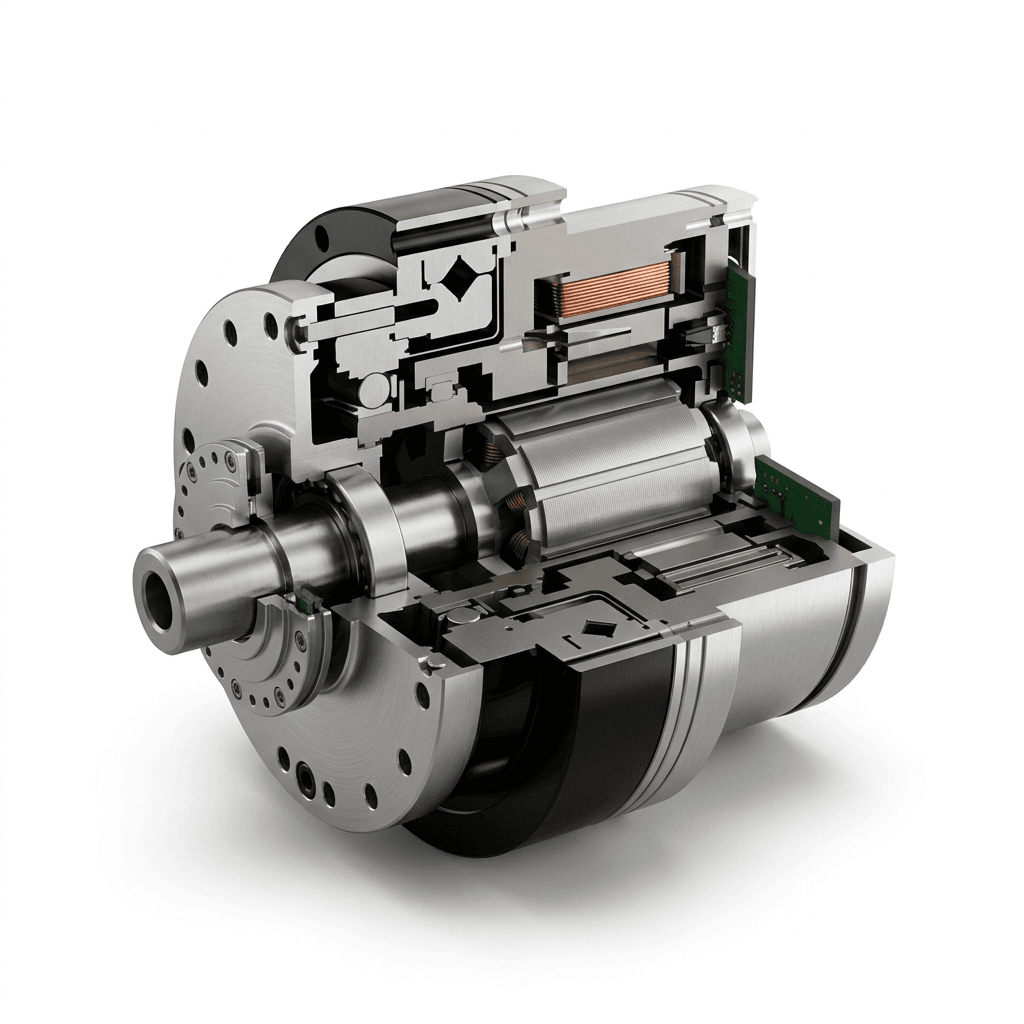
Dual vs Single Encoder Robot Joint Modules: Procurement Guide
Compare dual vs single encoder robotic joint modules for cobots and humanoids, with supplier questions, trade-offs, sourcing limits, and RFQ guidance.

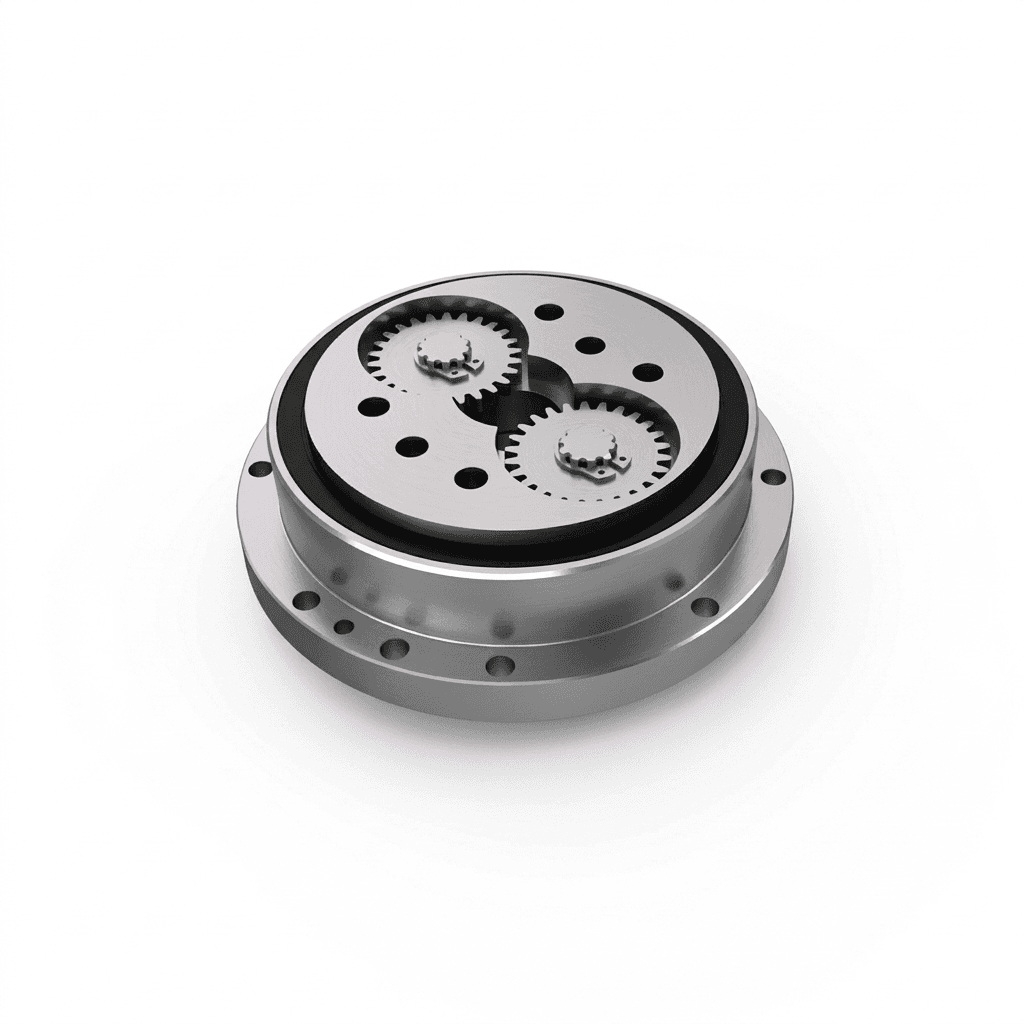
Strain Wave vs. Cycloidal Drive in Robot Joint Modules: Sourcing Guide
A comprehensive engineering and procurement guide comparing strain wave and cycloidal drives in robotic joint modules. Evaluate payload, backlash, and costs.
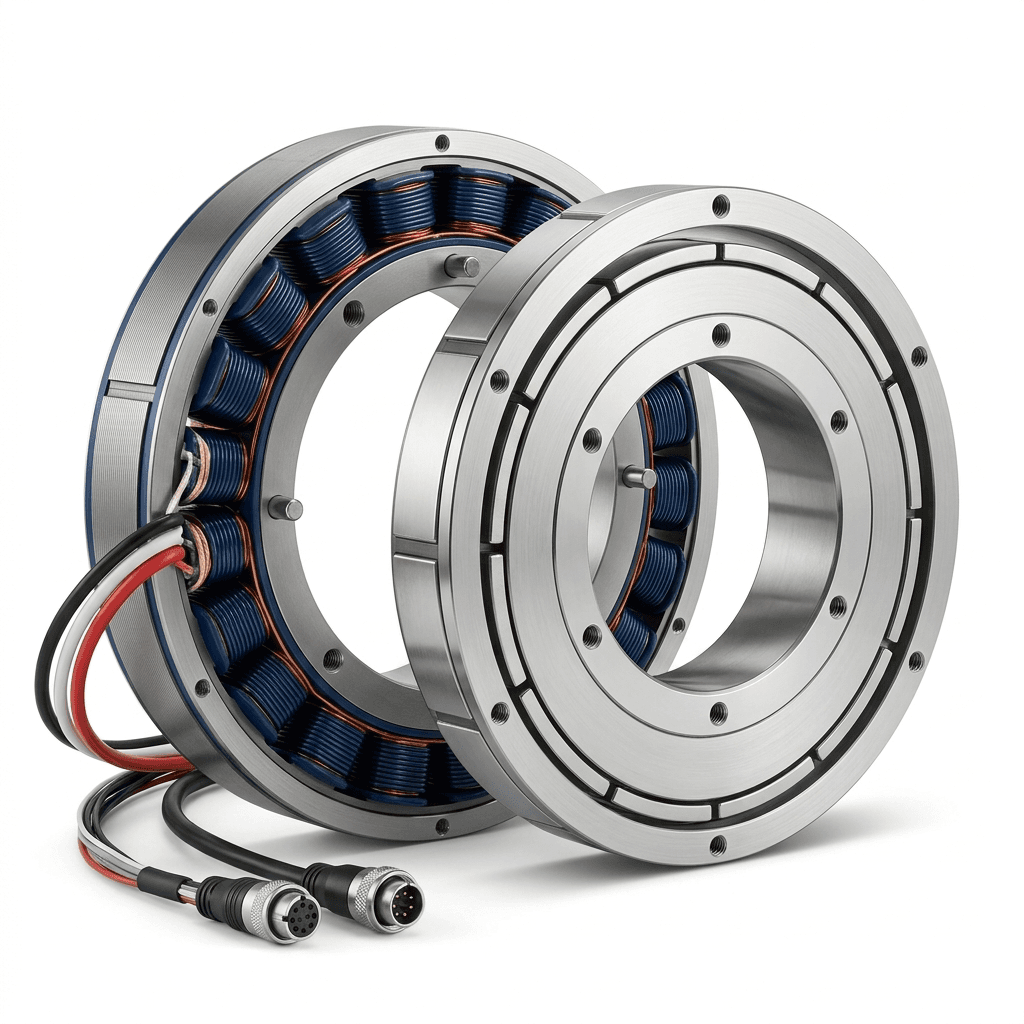
Frameless Torque Motor Guide: Outrunner vs Inrunner for Robotic Joints
A practical comparison of outrunner and inrunner frameless torque motors for cobot, humanoid, and precision motion applications.